Module 1: The Environment and Sustainability
Ethical Thinking
Ethics asks how we decide what is right and wrong conduct.
- Everyday decisions are ethical decisions
- Scientific and environmental decisions scale those choices up
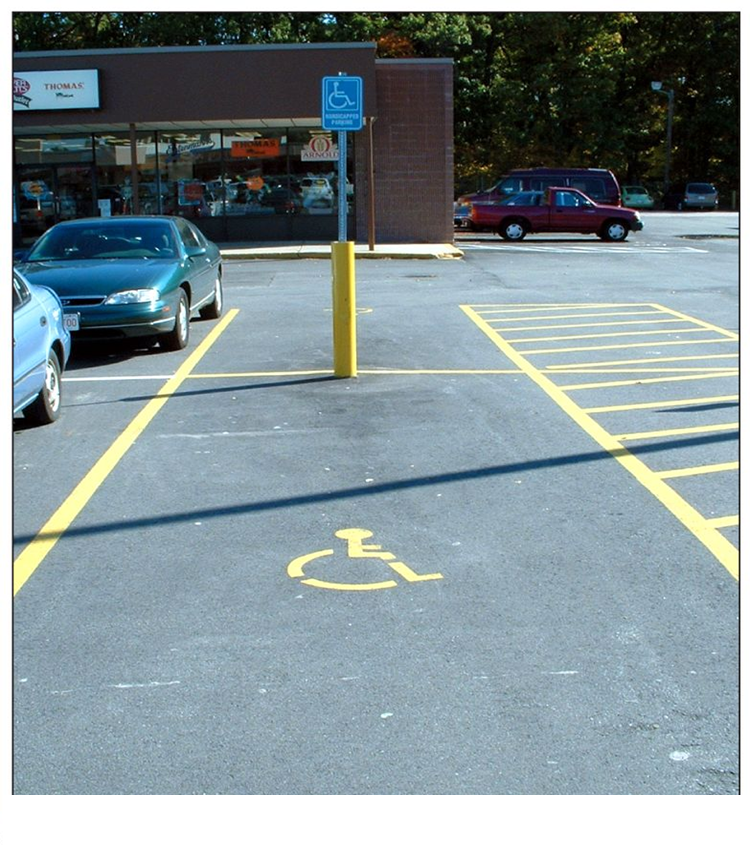
Example
- Would you park your car in this space?
- Why—or why not?
Example: DDT and pesticide use
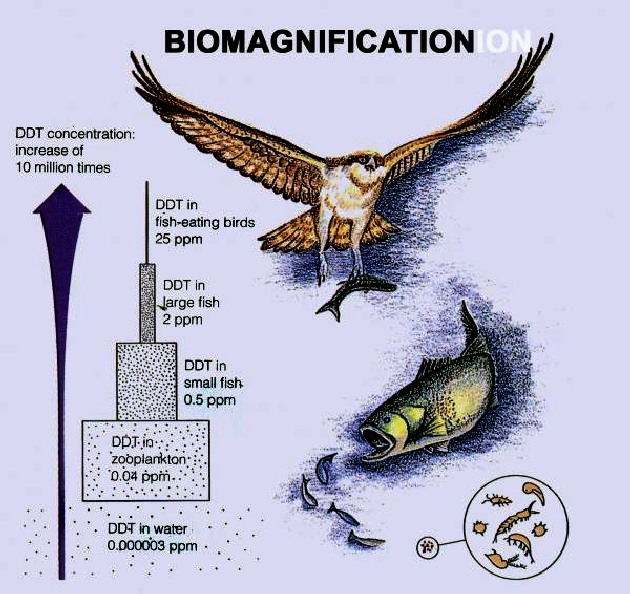
Synthetic pesticides were highly effective at controlling insect pests
Widely adopted before ecological consequences were understood
Scientific capability - Efficient, inexpensive, large-scale pest control
Ethical and ecological failure
Bioaccumulation in food webs
Severe impacts on birds and other wildlife
Long-term ecosystem damage
Lesson - Technical success ≠ ethical or ecological success
Sustainability requires anticipating system-wide and long-term effects
Biomimicry: A Concrete Example
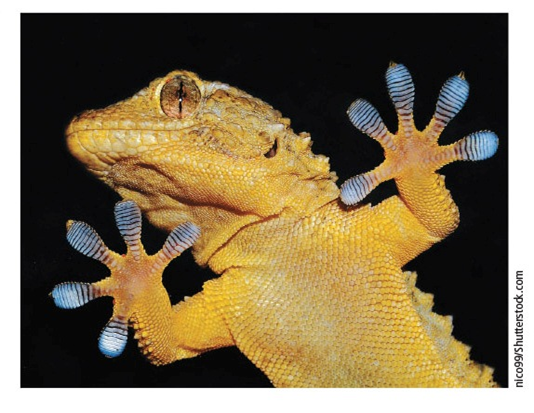
Gecko adhesion
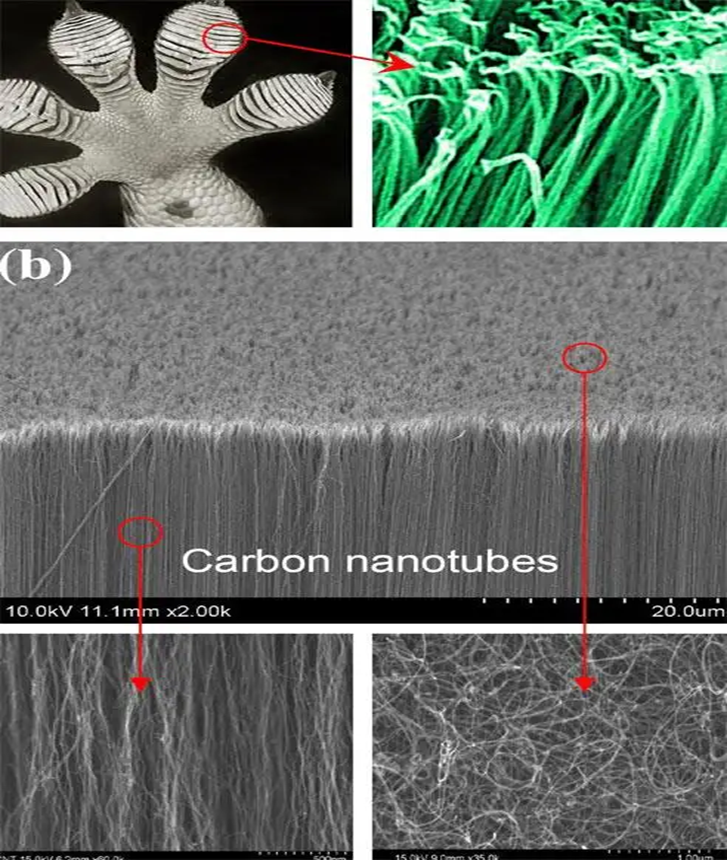
- Gecko toes are covered with microscopic hairs called setae
- Each seta branches into hundreds of smaller structures called spatulae
- Branching increases contact area with surfaces

The Physical Mechanism
- Spatulae get extremely close to surfaces
- This allows van der Waals forces to operate
Result:
Weak forces at the molecular level add up
Enables strong, reversible adhesion without glue
Three Scientific Principles of Sustainability
Life on Earth is sustained by:
Dependence on solar energy - Drives climate, photosynthesis, and food webs
Biodiversity - Provides ecosystem services and resilience
Chemical (nutrient) cycling - Waste in one process becomes a resource in another
Natural Capital
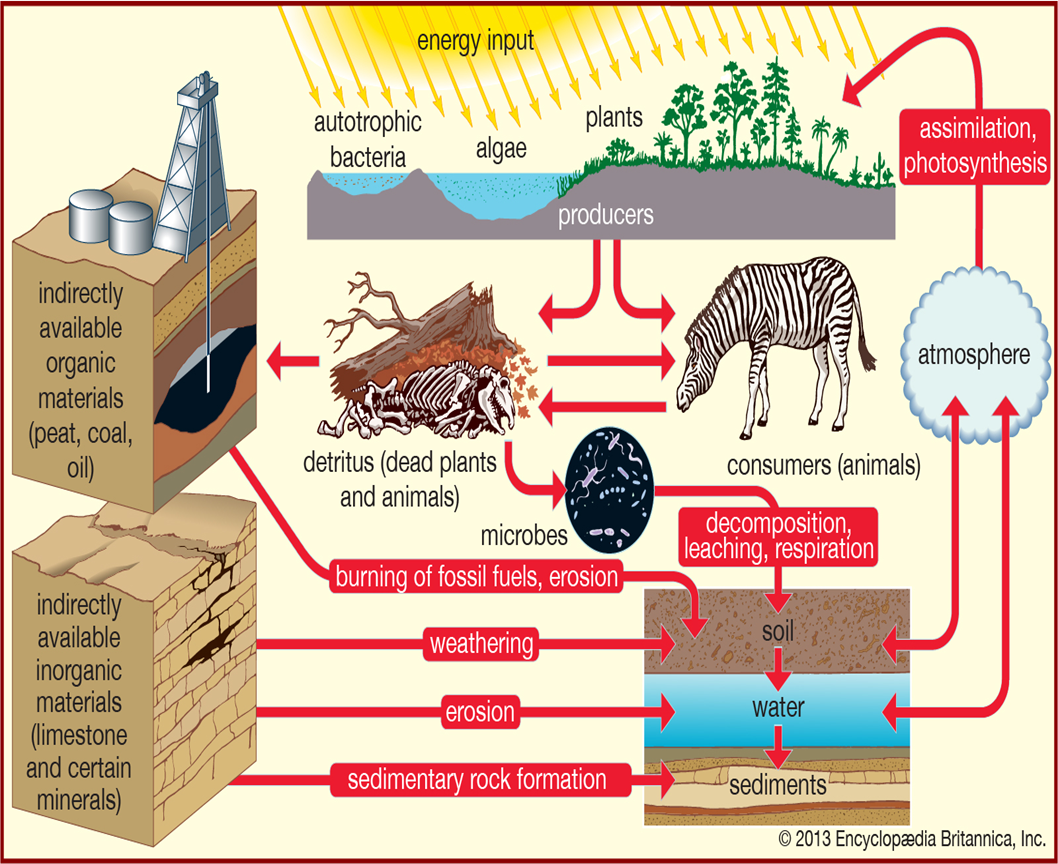
Natural capital
- Natural resources
- Ecosystem services provided by healthy systems
Examples:
- Clean air and water
- Pollination
- Climate regulation
Types of Resources
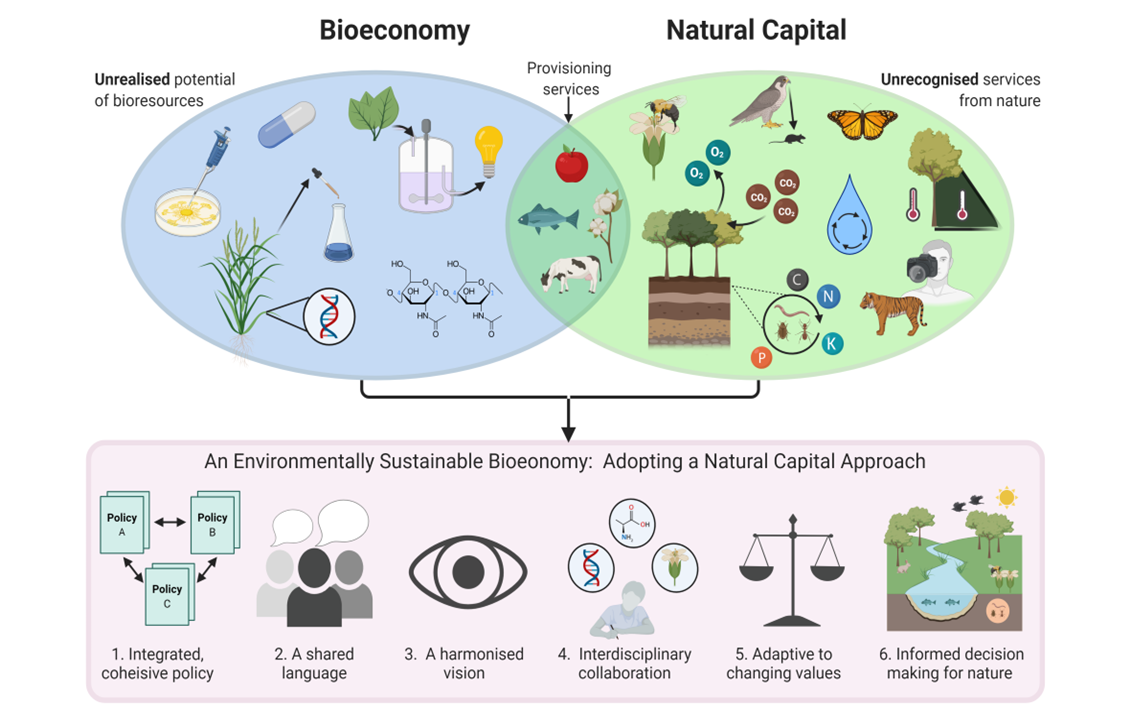
Inexhaustible resources
- Perpetually available (e.g., solar energy)
Renewable resources
- Replenished within their sustainable yield
Nonrenewable resources
- Fixed quantities renewed only through long-term geologic processes
Global Inequality in Resource Use
Countries differ in environmental impact:
Industrialized countries
- ~17% of global population
- Disproportionately high resource use
Developing countries
- ~83% of global population
- Middle-income and low-income nations
How Are We Affecting the Earth?
Over time, growth of ecological footprints depletes and degrades earth’s natural capital (natural resources and ecosystem services)
Environmental degradation
Humans have the power to sustain, add to, or degrade natural capital
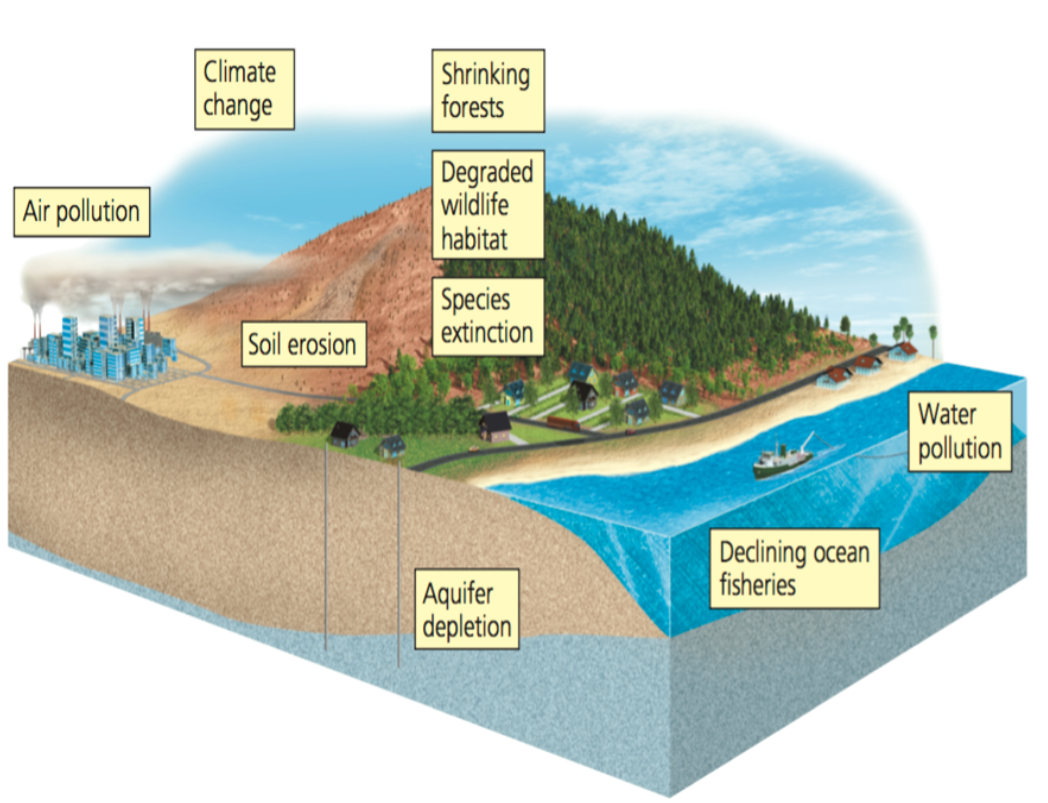
We Are Degrading Commonly Shared Renewable Resources
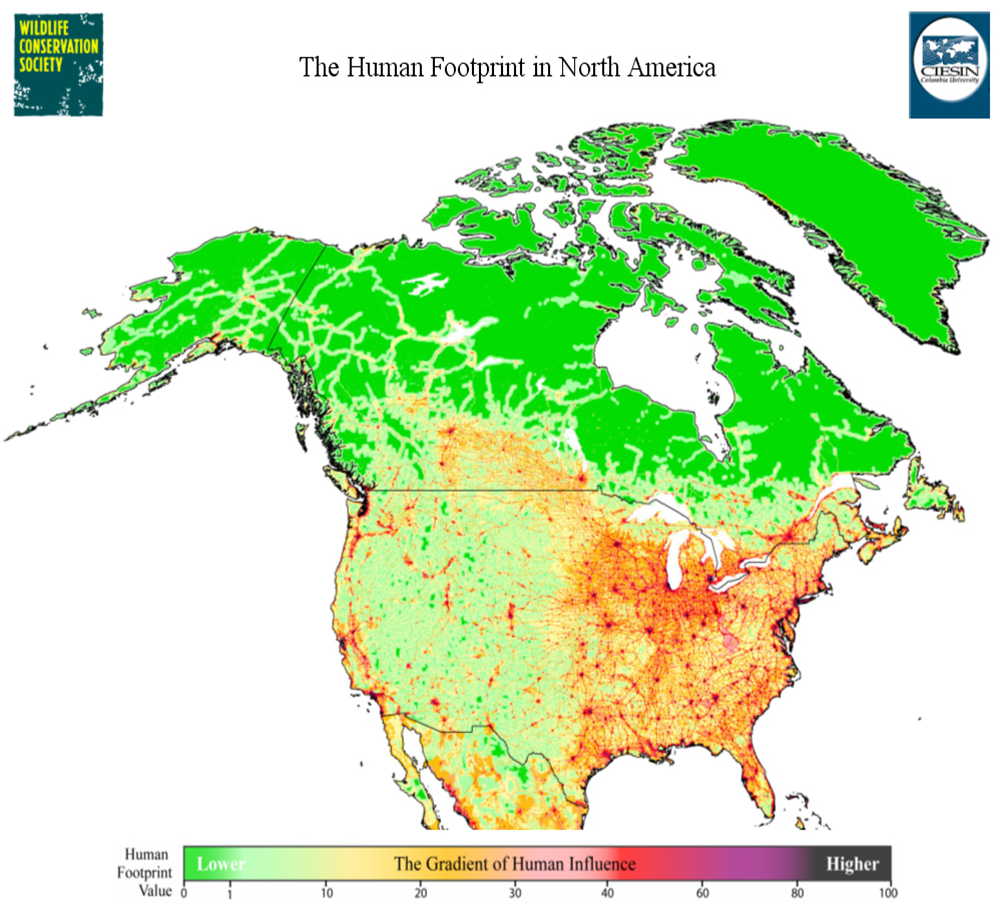
Natural Capital Use and Degradation:
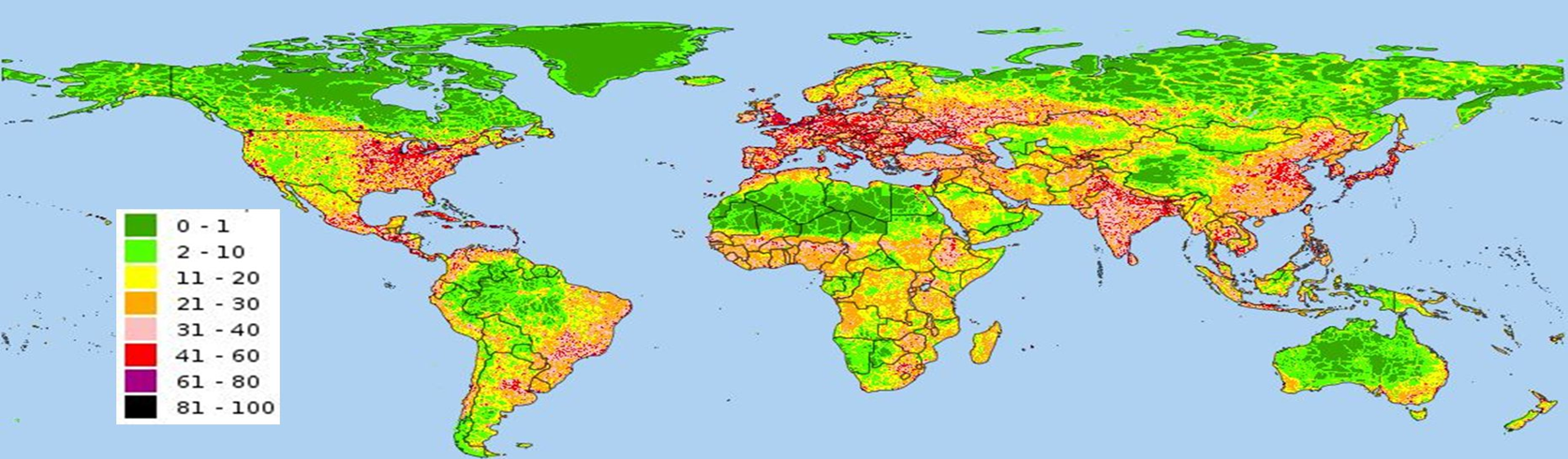
The human ecological footprint in North America.
Colors represent the percentage of each area influenced by human activities.
Cumulative degradation due to the overuse of:
Open access, renewable resources (atmosphere, open ocean, fish)
Shared resources (grasslands, forests, streams)
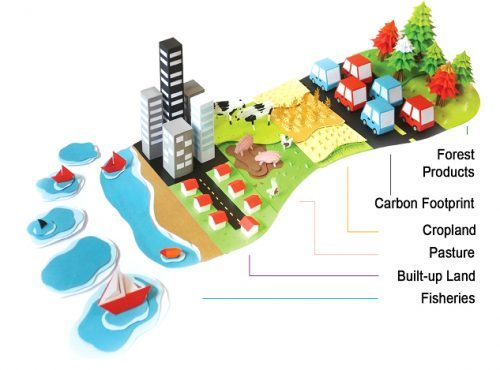
What Is an Ecological Footprint?
Ecological footprint
- The amount of land and water needed to supply a population or geographic area with renewable resources
- The ability to absorb/recycle wastes and pollution produced by resource usage
The growth of ecological footprints
- Leads to degradation of natural capital
- Results in the creation of pollution and waste
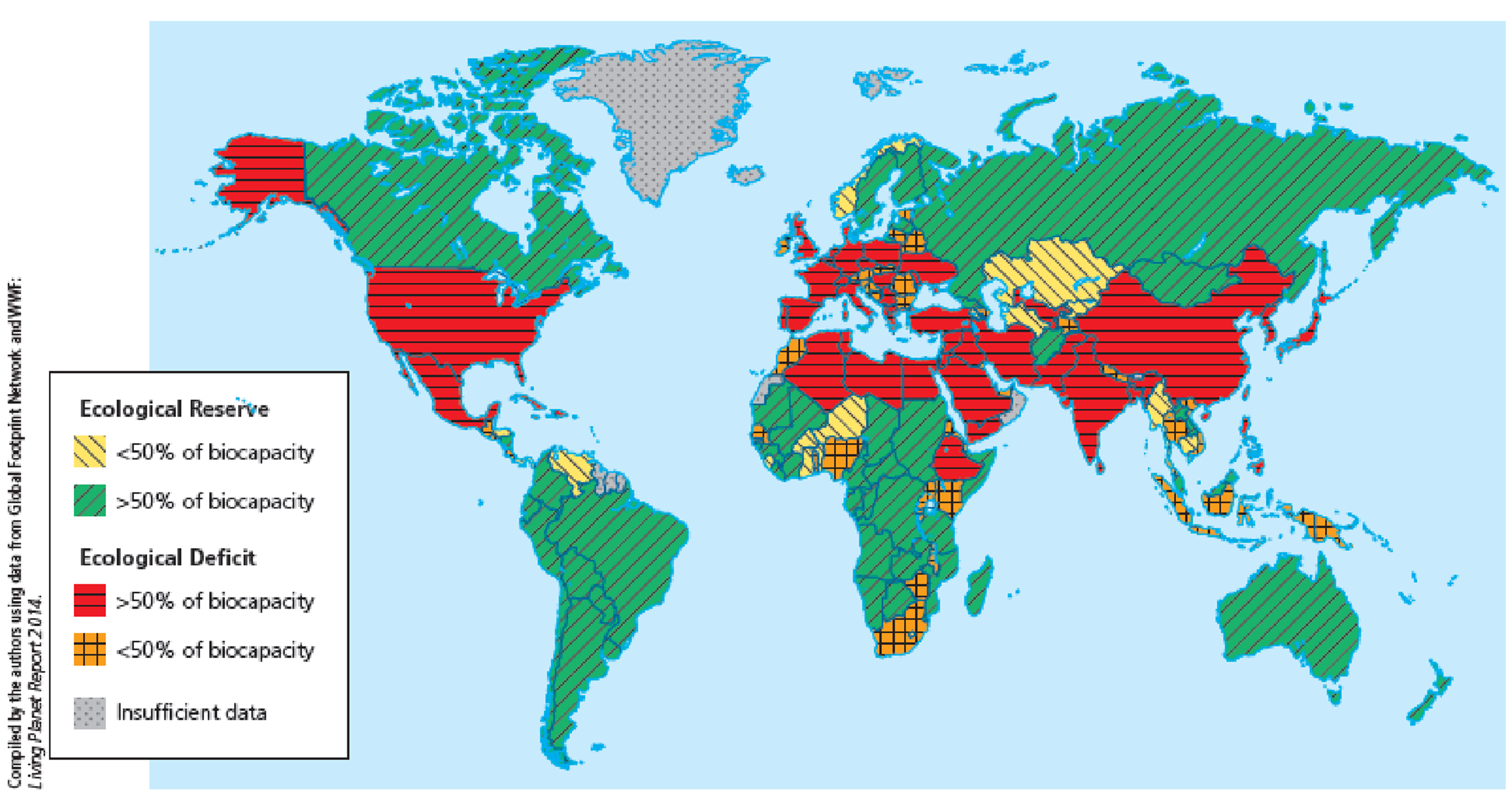
Our Ecological Footprints Are Growing
Ecological deficit - occurs when the ecological footprint is larger than the biological capacity to replenish resources and absorb wastes/pollution
In an ecological deficit, people are living unsustainably
- This creates adverse environmental impacts, which can be mitigated by upcycling
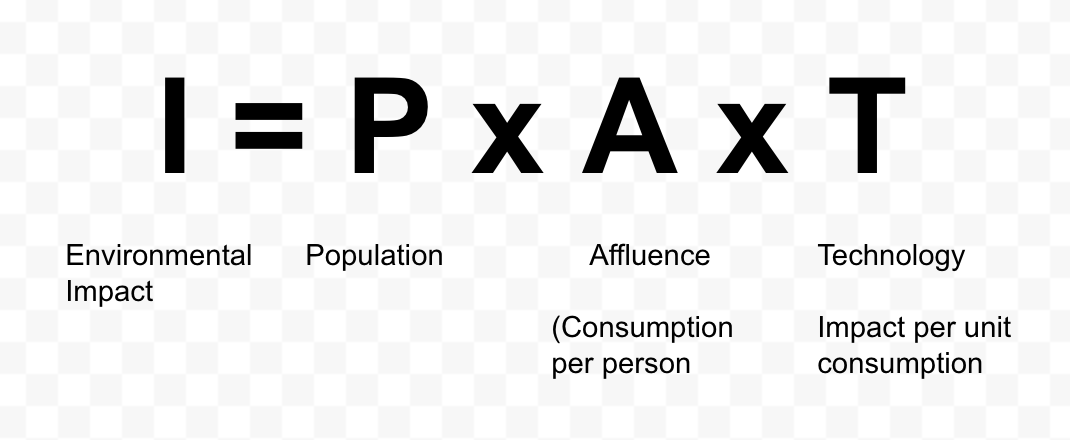
IPAT - Environmental Impact Model
In the early 1970s, a new environmental model called the IPAT model was developed
Determines environmental impact of human activities
Impact (I) = Population (P) × Affluence (A) × Technology (T)
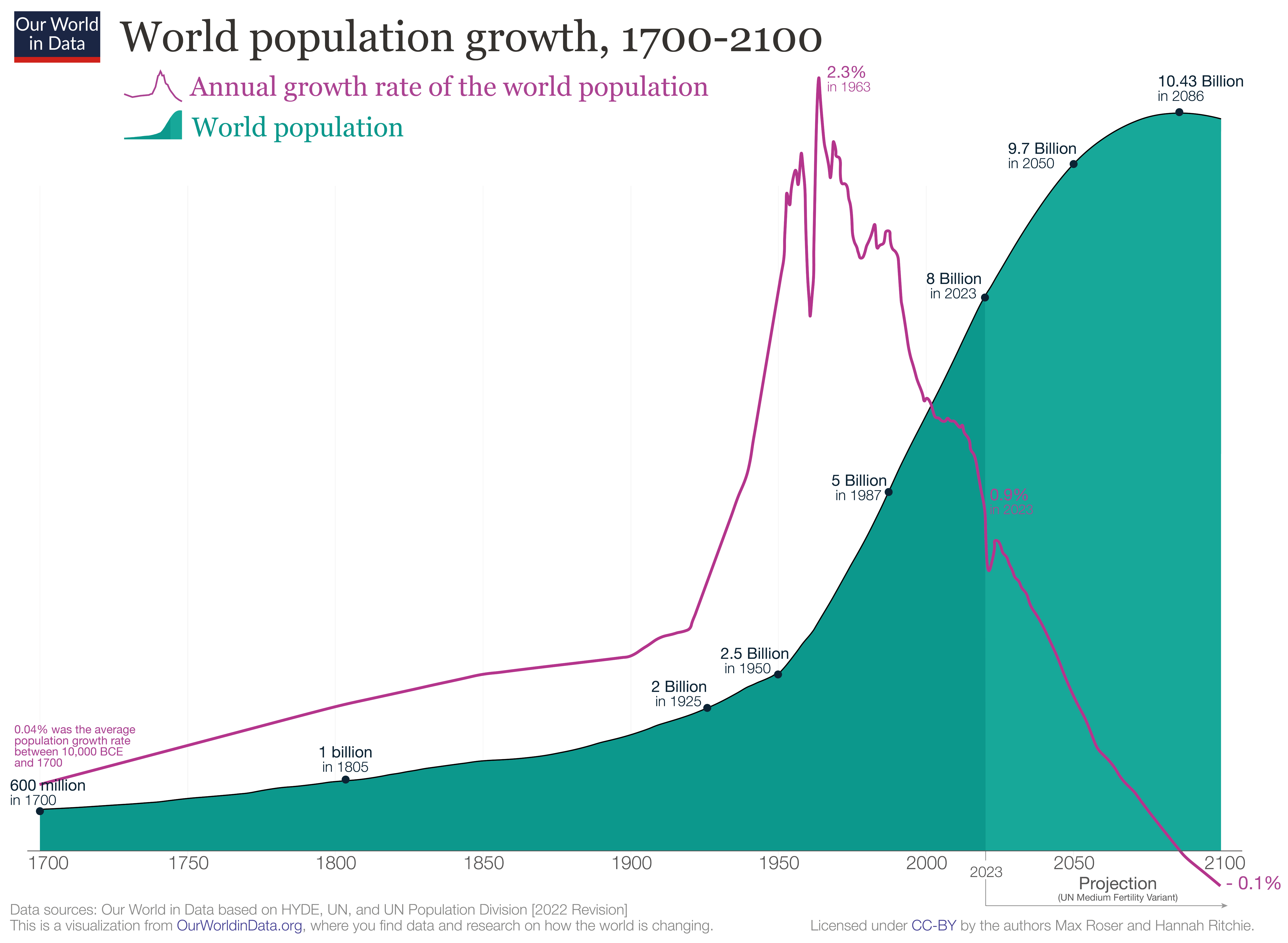
Human Population Is Growing at a Rapid Rate
Exponential growth:
The J-shaped curve represents past exponential world population growth
Projections to 2100 showing possible population stabilization as the J-shaped curve of growth changes to an S-shaped curve.
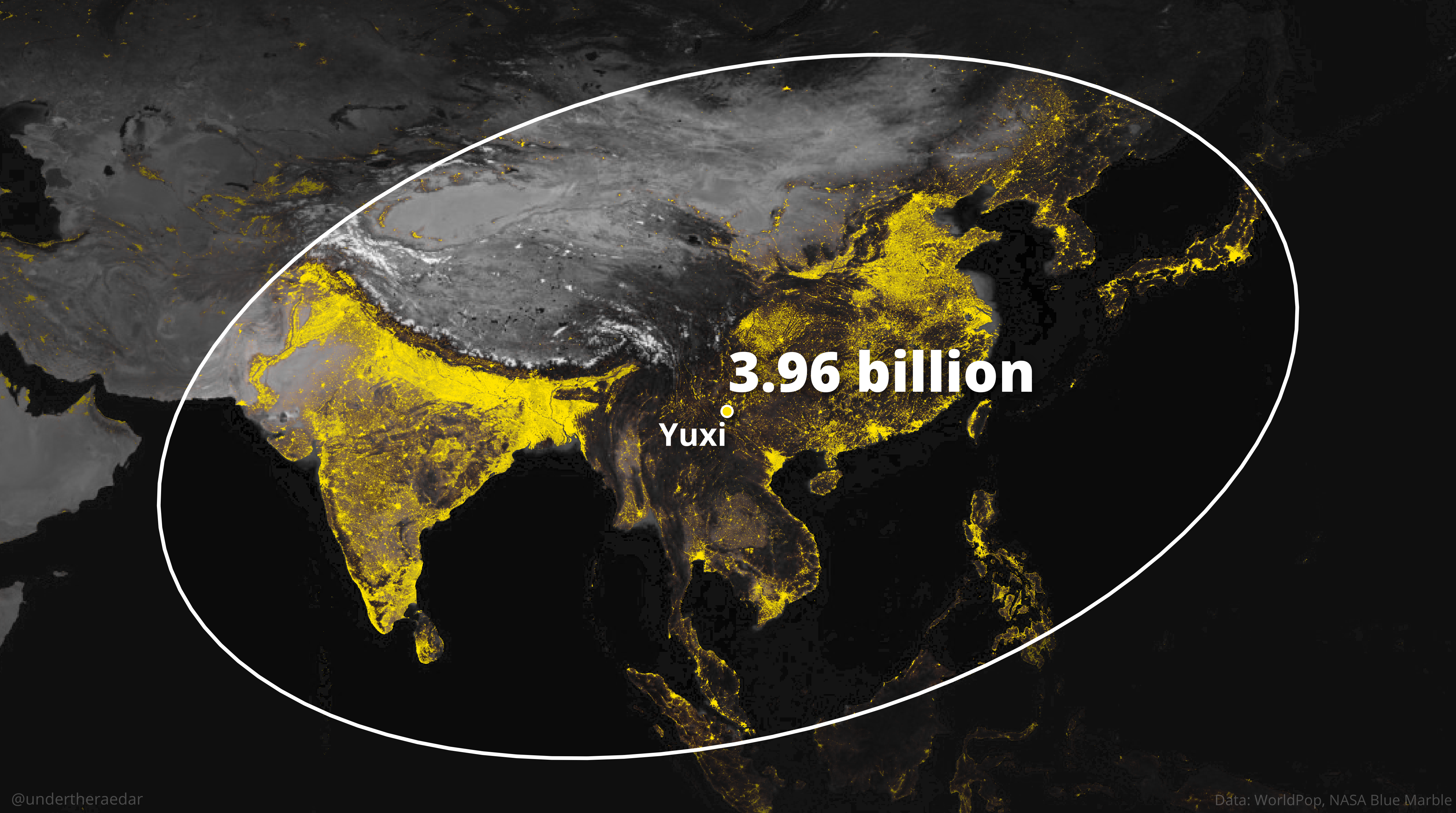
The Earth’s population is NOT evenly distributed
More than half the world’s population lives within the Yuxi ellipse.
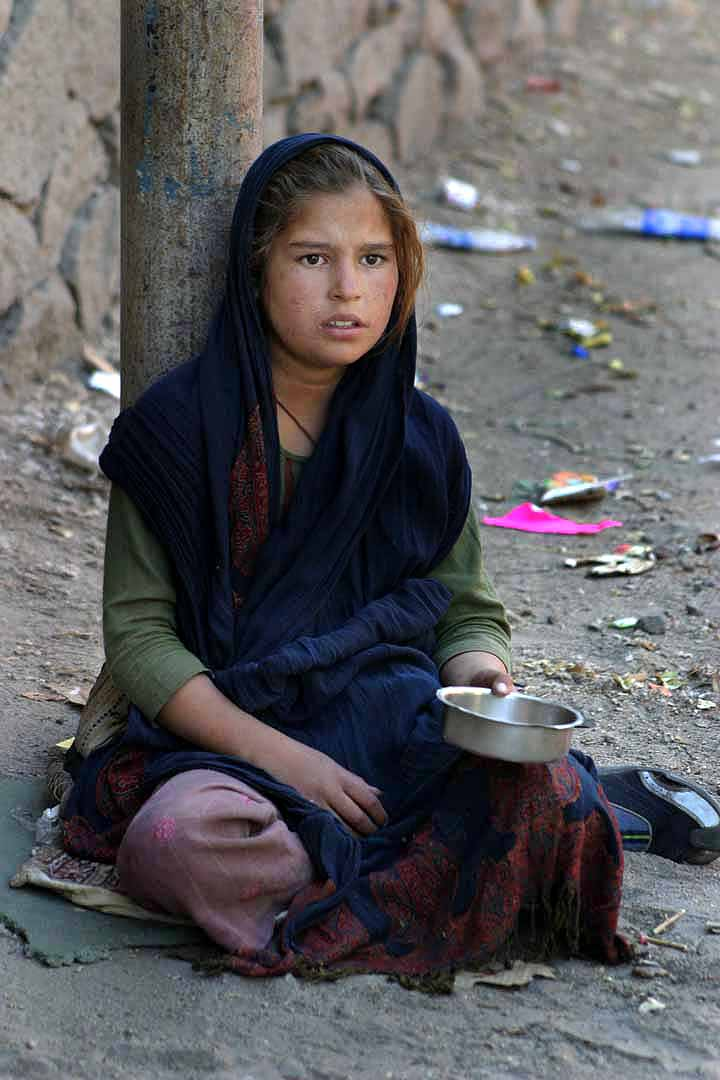
Poverty Can Have Harmful Environmental and Health Effects
Harmful effects
- Short-term requirements for survival can lead to degraded forests, topsoil, grasslands, fisheries, and wildlife populations
Health effects
Malnutrition, limited access to sanitation/clean drinking water, outdoor and indoor air pollution
One of every three children younger than age 5 in less-developed countries suffers from severe malnutrition caused by a lack of calories and protein.
We Are Increasingly Isolated from Nature
More than half the world’s population lives in urban environments, technologically isolated from nature
We are unaware of:
The origins of our food, water, and other goods
The pollution and waste generated by the production of these goods and services
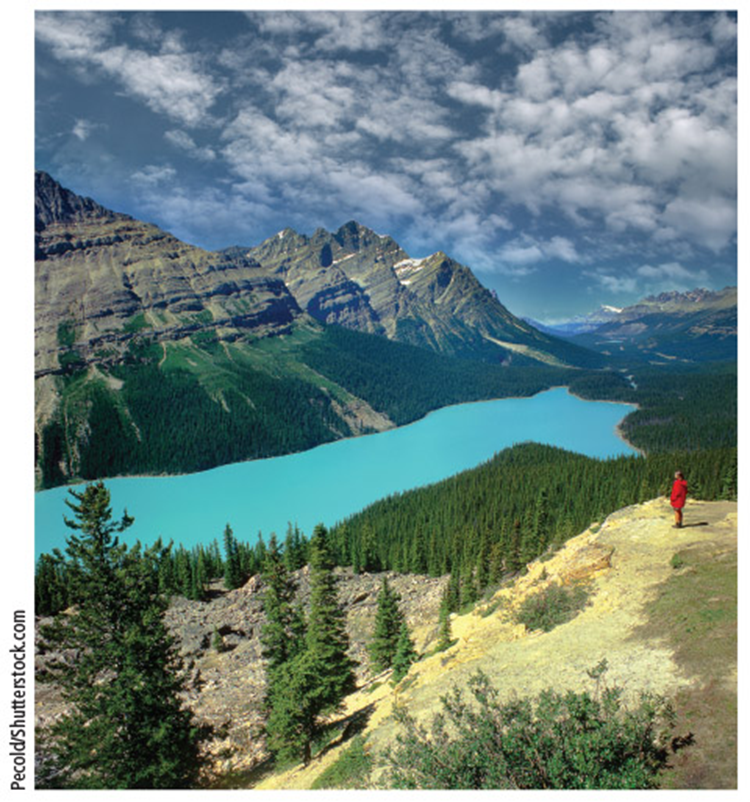
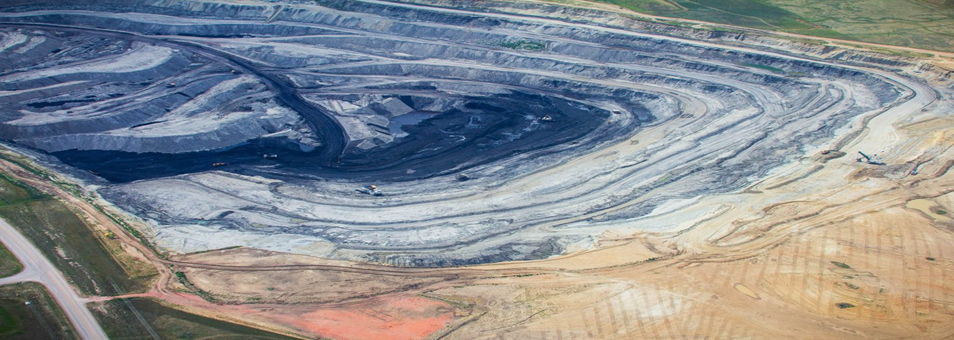
Affluence Has Harmful Environmental Effects
High levels of consumption and waste of resources
More air pollution, water pollution, and land degradation
Acquisition of resources without regard for the environmental effects of their consumption
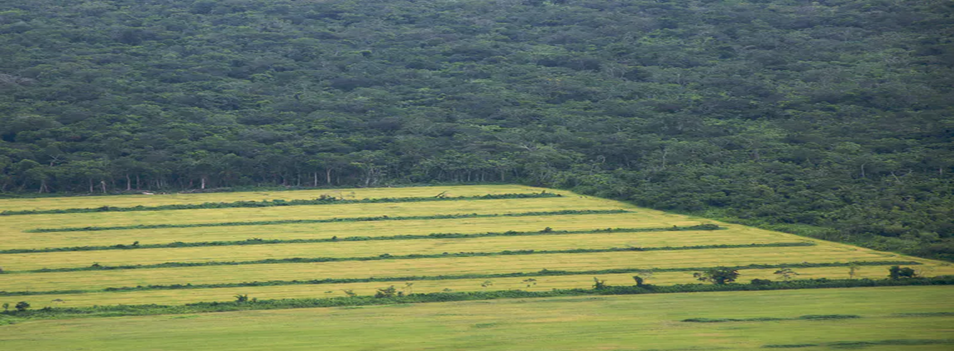
Affluence Has Beneficial Environmental Effects
Better education
Scientific research
Technological solutions resulting in improvements in environmental quality (e.g., safe drinking water)
Prices of Goods/Services Rarely Include Their Harmful Environmental/Health Costs
Consumers are unaware of the damage caused by their consumption
Current government subsidies often increase environmental degradation
To live sustainably, government subsidies must become beneficial to the environment by:
Taxing pollution and waste
Shifting from environmentally harmful to environmentally beneficial subsidies
The Rise of Environmental Conservation and Protection in the United States
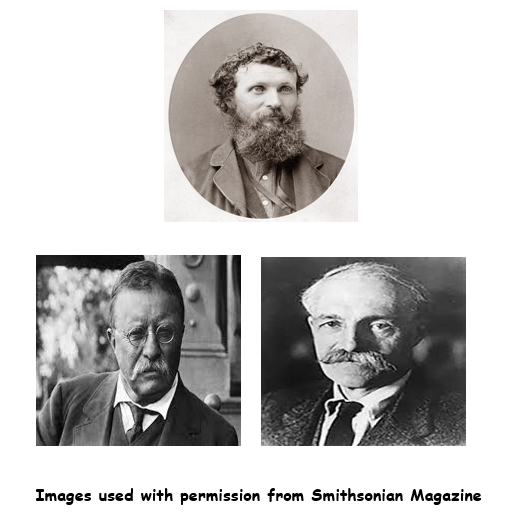
The preservationist school (John Muir)
- Leave wilderness areas on some public lands untouched
The conservationist school (Theodore Roosevelt, Gifford Pinchot)
- Manage all public lands wisely and scientifically, primarily to provide resources for people
Preservation of the Quality of the Planet’s Air, Water, Soil, and Wildlife
Silent Spring (1962) by Rachel Carson
- Heightened public awareness to pollution problems and the widespread use of pesticides such as DDT

First Earth Day was held on April 20, 1970
In 1970, the U.S. government established the Environmental Protection Agency (EPA)
“Decade of the environment”
What Is an Environmentally Sustainable Society?
In order to live sustainably, one must live off the natural resources without depleting or degrading the natural capital that supplies these natural resources
Earth’s natural capital provides natural income
- Renewable resources such as plants, animals, soil, and clean water and air
By living only on the natural income and not depleting the natural capital, society moves from an unsustainable lifestyle to a sustainable one

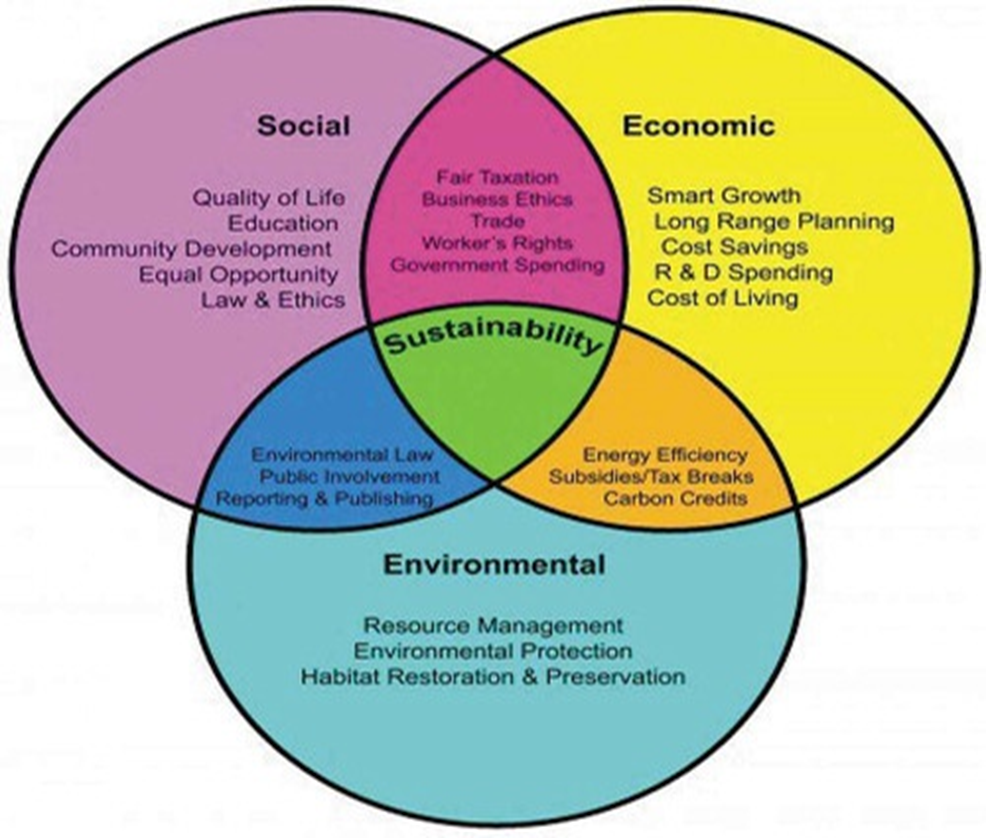
Social Dimensions of Sustainability
Key ideas from the social sciences:
Ecosystem services are free benefits from nature
Economies depend on healthy ecosystems
Sustainability requires slowing resource use to match replacement rates